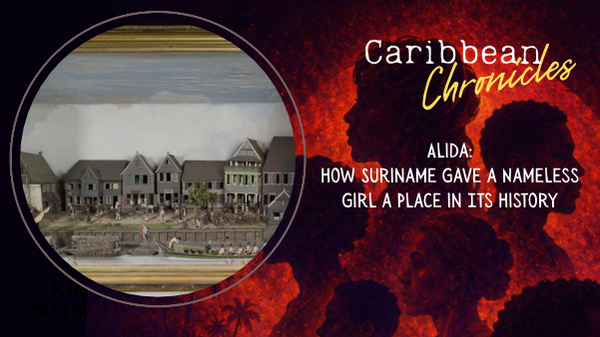
For generations, the enslaved girl in the story of Susanna du Plessis had no name. Accounts of her killing travelled through Surinamese households, while the written record left much of her life unknown. Today she is remembered as Alida, with a statue and a cultural pageant bearing her name. How did a girl remembered through a story of colonial violence become someone generations of Surinamese women would honour?


More from this show
A stranger follows a group of people home one evening on Curaçao. Near Palu di Kalbas, a place already feared as the home of a zumbi, he...
Late one night on Dominica, Jeanne is cleaning fish when a small dog wanders into her yard. She feeds it scraps and thinks nothing of it...
A man in Belize keeps finding tight knots in his horses’ manes, no matter how often he cuts them out. Moving the horses seems to solve the...
People in Hell’s Gate, Saba, told of a blue light wandering the shoreline near Johnny Frau’s Pond. They believed it was Johnny’s ghost...
A famine leaves Bouki hungry, and his nephew Ti Malice has a plan: they will sell their mothers and use the money to buy food. Bouki...
Before it became Santurce, this part of San Juan was San Mateo de Cangrejos, a town built by free Black people. Pedro Cortijo helped secure...